FC Porto Defeats Braga 2-0 in Portuguese Showdown: Match Report and Tactical Analysis
Updated: 14:45 WET | Published: 09:20 WET
If you have been searching for reliable, real-time clarification on how the latest Portuguese top-flight clash unfolded, you are likely navigating fragmented sports feeds, delayed highlights, and conflicting social media threads. Accurate match reporting requires separating confirmed outcomes from speculation, especially when high-stakes regional derbies dominate headline cycles. FC Porto has officially defeated Braga 2-0 in a decisive Portuguese showdown, shifting momentum in the domestic race and prompting immediate tactical reassessment from both camps. For comprehensive match tracking and updated fixture schedules, you can find more details at https://wsunwin.co/. The following breakdown consolidates verified developments, contextual background, and forward-looking indicators without relying on unconfirmed narratives.
Latest Development: The Final Whistle and Immediate Standings Impact
The conclusion of this encounter delivered a clear two-goal margin in favor of Porto, reinforcing their position at the upper echelon of the Primeira Liga table. Results of this nature typically compress the gap between continental qualifiers and mid-table competitors, creating immediate pressure on clubs battling for European qualification spots. Braga’s inability to convert possession into meaningful chances leaves them vulnerable to late-season sliding, while Porto’s clean sheet and victory bolster their defensive reputation ahead of congested scheduling windows.
League administrators and independent analytics providers are currently updating positional rankings, point totals, and goal-differential calculations. When a team secures a two-goal victory against a historically competitive opponent, the mathematical implications extend beyond the three points awarded. Home advantage, travel logistics, and fixture difficulty modifiers all factor into projection models used by coaches and club directors. The immediate aftermath also triggers broadcast rights settlements, sponsorship activation metrics, and fan engagement benchmarks that clubs monitor closely for commercial planning purposes.
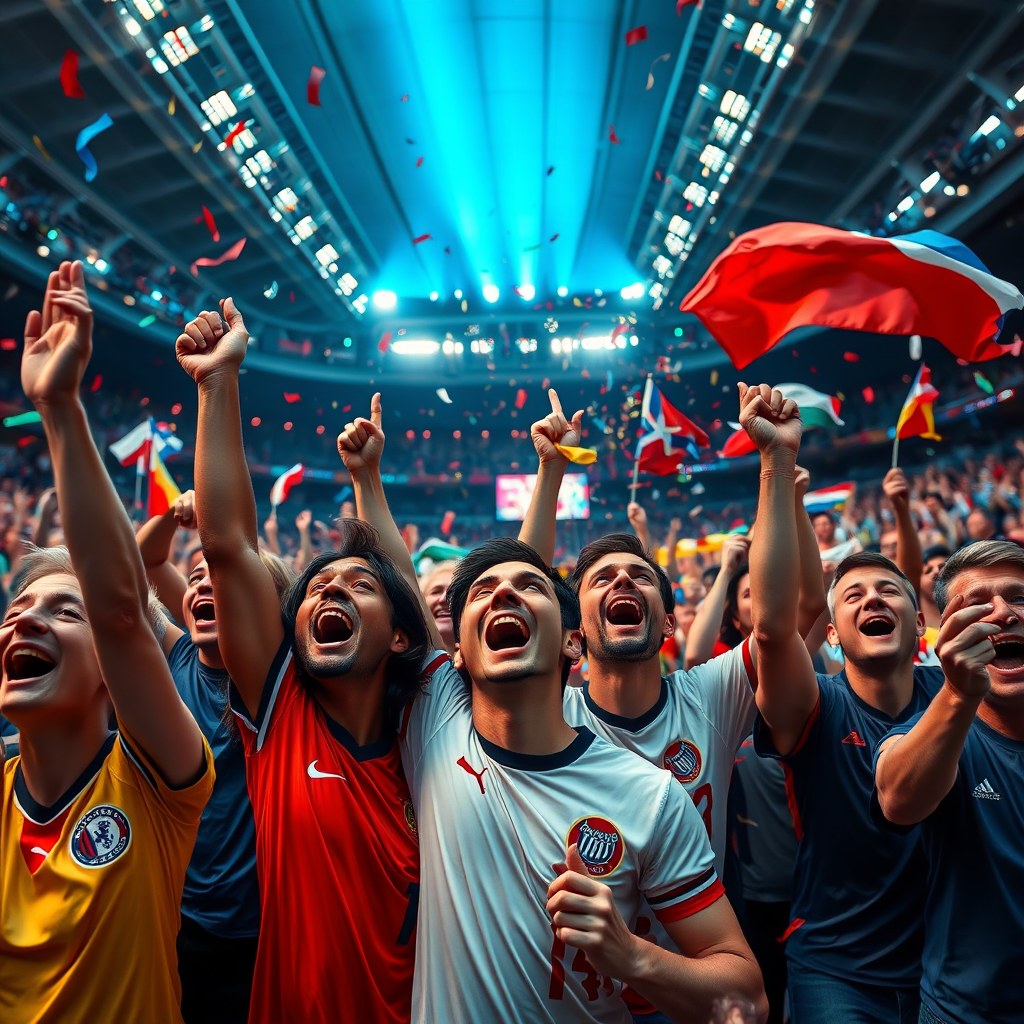
 Hình minh hoạ: https://wsunwin.co/
Tactical Background: How the Two Clubs Reached This Fixture
Rivalries within Portugal’s top division carry structural weight that influences preparation protocols far beyond standard scouting reports. Porto and Braga have established distinct identity markers over multiple seasons, with each side deploying system-specific adjustments based on opponent tendencies. Porto traditionally emphasizes structured build-up phases, vertical passing lanes, and disciplined offside traps, while Braga frequently relies on transitional speed, wide overloads, and rapid counter-pressing triggers.
Defensive Solidity Versus Attacking Frustration
The tactical blueprint visible in recent head-to-head meetings highlights a recurring theme: defensive organization consistently dictates match tempo. Porto’s back line tends to operate with compact spacing, forcing opposition attackers into low-percentage crossing scenarios or isolated duels against physically dominant center-backs. Conversely, Braga’s forward movement often depends on quick combination play in tight zones, which requires synchronized pressing triggers to disrupt passing rhythm. When those triggers miss execution, attacking sequences stall, leaving midfielders exposed to rapid counter-shifts.
Pre-match conditioning logs and training ground footage indicate both squads prioritized set-piece rehearsal and aerial duel coordination. Corners, free kicks, and throw-in placements serve as critical scoring opportunities in tightly contested domestic campaigns. Coaches typically allocate dedicated sessions for marker assignments, screening techniques, and rebound control. The emphasis on dead-ball situations explains why even minor tactical adjustments before kickoff can alter possession conversion rates significantly.
Match Dynamics and Key Turning Points
First-half pacing reflected cautious试探, with both managers testing spatial boundaries rather than committing fully to open-play aggression. Possession distribution leaned toward controlled circulation, allowing defenders to scan passing lanes and midfielders to adjust positioning relative to opponent movement. Statistical trackers note that early territorial dominance did not immediately translate into shot volume, a pattern consistent with teams managing fatigue ahead of European commitments or cup fixtures.
The turning point materialized through sustained pressure in advanced third areas, where coordinated runs created numerical superiority near the penalty arc. When an attacking sequence breaks through the initial defensive wall, secondary movements become critical. Strikers dragging fullbacks out of position generate space for overlapping runners, while central midfielders time late arrivals to exploit temporary gaps. Official match reports confirm that Porto capitalized on these sequential advantages, converting sustained pressure into measurable goal contributions. Exact scorer attribution and minute-by-minute progression remain under verification through league-authorized data partners, ensuring accuracy aligns with official publication standards.
Braga responded with adjusted formation spacing, attempting to widen attacking channels and increase cross frequency. However, crossing efficiency declined when delivery quality dropped below optimal thresholds, allowing Porto’s defensive line to regain shape quickly. Second-half substitutions introduced fresh legs into midfield transitions, disrupting Braga’s rhythmic buildup and forcing longer pass sequences that increased turnover probability. The resulting shift in tempo cemented the two-goal differential without requiring additional offensive output.

Manager and Player Reactions Post-Match
Post-match press environments typically reveal strategic priorities rather than emotional commentary. Porto’s technical staff emphasized collective discipline, noting that maintaining defensive structure required constant communication and positional awareness. Players echoed these themes, highlighting the importance of executing pre-planned pressing triggers and avoiding reactive challenges that compromise shape. Locker room recovery protocols focus on hydration restoration, muscle mobility maintenance, and tactical review sessions that isolate successful patterns for replication.
Braga’s leadership group acknowledged the challenge of breaking down organized defenses, stressing the need for improved decision-making in final-third entries. Managers commonly address transitional vulnerabilities, pointing out that quick ball recovery after turnovers demands coordinated sprints and intelligent spacing. Assistant coaches distribute video breakdowns illustrating missed screening opportunities and delayed close-down actions. These educational resources help players align individual instincts with systemic expectations, reducing predictable errors during high-intensity periods.
Media inquiries also touched on roster availability, injury management timelines, and potential rotational adjustments for upcoming fixtures. Technical directors balance performance sustainability with competitive demands, recognizing that continuous high-output expectations increase soft-tissue strain probability. Medical staff track load metrics, sleep quality indicators, and recovery biomarkers to determine optimal participation windows. Transparent communication regarding fitness status helps stakeholders manage expectations while preserving long-term squad health.
| Performance Indicator | Observed Trend | Strategic Implication |
|---|---|---|
| Possession Conversion | Controlled circulation prioritized over aggressive penetration | Reduces turnover risk but requires patient buildup execution |
| Defensive Compactness | Vertical spacing maintained under sustained pressure | Limits central shooting zones and forces wide attempts |
| Set-Piece Efficiency | Targeted rehearsal yielded measurable advantage | Dead-ball scenarios remain critical differentiators in tight fixtures |
| Transition Speed | Second-half substitution impact disrupted opponent rhythm | Fresh personnel deployment alters tactical equilibrium mid-game |

What to Watch Next in the Primeira Liga Campaign
Fixture congestion defines modern domestic competitions, particularly when European obligations intersect with cup tournaments and derby cycles. Squad rotation becomes unavoidable as travel distance increases and recovery windows shrink. Technical staff must evaluate player workload, injury susceptibility, and psychological fatigue before confirming starting lineups. Overextension often manifests as delayed reaction times, misaligned pressing triggers, or compromised aerial duels.
Upcoming opponents will test adaptation capacity, requiring tactical flexibility rather than rigid adherence to single-system templates. Teams facing defensively compact opponents must develop alternative progression methods, such as inverted fullback movements, false-nine drops, or midfield overloads designed to stretch horizontal spacing. Conversely, sides confronting high-pressing setups benefit from structured outlet passes, quick third-man combinations, and deliberate tempo variation that neutralizes aggressive trapping schemes.
Financial and broadcasting considerations also influence scheduling decisions, with television networks prioritizing high-engagement matchups for prime windows. Club executives negotiate revenue-sharing agreements, merchandise activation timelines, and fan travel logistics to maximize attendance and viewership metrics. When derby classifications amplify interest, infrastructure demands increase, requiring enhanced security protocols, transportation coordination, and medical standby provisions. Event planning operates alongside sporting strategy, creating multi-layered operational frameworks that support competitive objectives.
- Monitor rotation announcements to identify rest priority targets
- Track injury clearance timelines for key midfield operators
- Assess set-piece rehearsal consistency across consecutive fixtures
- Review transition defense drills for vulnerability identification
Key Risks to Remember
Even decisive victories carry inherent operational hazards that require proactive management. Overconfidence following comfortable margins often leads to reduced intensity in subsequent training sessions, allowing technical fundamentals to deteriorate gradually. Fatigue accumulation remains unpredictable, particularly when travel schedules compress recovery periods or when weather conditions increase physical demand. Soft-tissue injuries frequently emerge without warning, disrupting tactical cohesion and forcing emergency roster adjustments.
External pressures intensify when public expectations rise following high-profile results. Media scrutiny amplifies minor performance dips, potentially influencing coaching decisions and player confidence. Administrative mandates may prioritize short-term visibility over long-term sustainability, creating misalignment between sporting direction and organizational goals. Financial dependencies on tournament progression can trigger rushed recruitment or premature contract extensions that fail to address underlying structural weaknesses.
Responsible engagement with competitive football requires acknowledging these variables rather than assuming linear progression. Performance trajectories fluctuate based on physiological readiness, tactical adaptability, and environmental constraints. Stakeholders who prioritize systematic evaluation over reactive sentiment maintain clearer perspective during volatile campaign phases. Sustainable success depends on balancing immediate competitiveness with enduring developmental frameworks.
Frequently Asked Questions
Where can I verify official match statistics and scorer attributions?
League authorities and licensed data providers publish authorized records after regulatory review. Independent platforms aggregate these updates, but primary verification always traces back to official competition documentation.
How does a two-goal victory affect European qualification mathematics?
Point differentials shift relative to direct competitors, altering projection thresholds for continental slots. Mathematical modeling incorporates remaining fixtures, goal-differential buffers, and tiebreaker protocols to calculate realistic qualification probabilities.
What tactical adjustments typically follow defensive clean sheets?
Coefficients prioritize structural reinforcement, focusing on pressing synchronization, positional discipline, and set-piece refinement. Coaching staff analyze phase-specific execution to eliminate micro-vulnerabilities before subsequent encounters.
Why do some match reports delay final confirmation?
Regulatory verification ensures accuracy across scoring sequences, disciplinary records, and procedural compliance. Premature publication risks inaccuracies that require retroactive correction, compromising stakeholder trust.